Prefab SIP Panel House


Built with Structural Insulated Panels (SIP), this prefab SIP panel house is conceived as an attempt to achieve a maximum optimization of dimensional and structural qualities of this construction material. This modular house was built in 10 days with 40 split-level panels (21 cm x 488 cm x 122 cm) and 71 wall panels (11.4 cm x 244 cm x 122 cm). The SIP panels exposed on the facade are fashioned as terraces on the third and second floors.

Design: Alejandro Soffia, Gabriel Rudolphy
Area: 139 sqm
Year: 2011
Location: Santo Domingo, Chile
Photography: Felipe Fontecilla

Advertisement

Modular Prefab Elevated Home on Stilts, Maryland


Floor plans
About Kieran Timberlake Associates

DesignKieran Timberlake Associates
ProjectLoblolly House
Area2,200 square feet
Assemble Time6 weeks
Year2006
LocationTaylors Island, Maryland
PhotographyBarry Halkin, Peter Aaron / Esto, Halkin Photography


Awards

AIA Institute Honor Award
AIA Housing Award
AIA Pennsylvania Honor Award
AIA Philadelphia Gold Medal
AIA TAP BIM Award
Architect R+D Award
Chicago Athenaeum American Architecture Award and International Architecture Award
EPA Lifecycle Building Challenge
World Architecture Festival (shortlisted)

This modular prefab elevated home on stilts is composed entirely of ready-made components and off-site manufactured elements, assembled in less than six weeks. The install process begins with off-site manufactured ceiling and floor panels. They distribute cold and hot water, radiant heating, waste water, electricity and ventilation through the building. Fully integrated mechanical room and bathroom modules are lifted into planned position. Wall panels containing insulation, structure, windows, exterior rain screen and interior finishes complete the cladding.


Description from architects

How can we holistically transform the way we make architecture, compressing the construction timespan and making use of technology to create a truly sustainable, aesthetically moving shelter?

Loblolly House was inspired by the childhood urge to build tree houses. An effort to bring back the magic of a house in the trees — one that requires climbing up to gain a view — Loblolly House appeals to a primal instinct about how we inhabit space. It also represents a home that is uniquely integrated with its setting among the tall loblolly pines from which it takes its name.

Site

Positioned between a dense grove of pines and a lush foreground of saltmeadow cordgrass leading to the bay, the prefab modular elevated home on stilts is formed about and within the elements of trees, tall grasses, the sea, the horizon, the sky, and the western sun. The skewed piles upon which the foundation rests mimic the form of the forest, fusing the natural elements of this barrier island to architectural form.

Loblolly House also reflects an environmental ethic; by lifting it off the ground, we ensure that it touches the site very lightly. Our desire in conceiving this stilt home was to reimagine what was possible in the realm of building — with the intention to improve the productivity of design and construction, enhance affordability and quality, and do so in an ethical and aesthetically moving manner.

Fabrication

Most houses are built from thousands of parts, which are transported separately to the construction site and pieced together by hand — a process of extraordinary duration, cost, and environmental impact. With the prefab home made from pre-built modules, by contrast, we wanted to use integrated assemblies of those parts, fabricated off site, to build a house in an entirely different way. Specification was no longer structured around the 50 divisions of the Construction Specifications Institute traditionally used to organize the multitude of parts. Instead, the conception and detailing were formed about four new elements of architecture: scaffold, cartridge, block, and equipment. The connections between elements were designed to be made using only simple hand tools.

Each element — and its junctures with other elements — was first digitally modeled to an exquisite level of detail. At the time, in 2004, parametric modeling software was in its nascent stages and required significant effort, but its use ensured that elements fabricated simultaneously would fit together perfectly. The assemblies were then fabricated off site, anticipating their attachment to the aluminum scaffold system that would eventually support and connect them. Unlike a traditional building process, in which construction must happen sequentially from the ground up, with the prefab home made from pre-built modules, the various elements could be prepared at the same time, shifting 70 percent of the effort to the factory. All of the modular prefab elevated home's systems were pre-integrated into the floor and ceiling panels, termed smart cartridges, to distribute radiant heating, hot and cold water, waste water, ventilation, and electricity throughout the prefab elevated house on stilts.


Assembly

At the Taylors Island site, the building began with traditional, site-based preparation of the foundation. However, once the aluminum frame was in place, the assembly process could continue apace. Floor and ceiling cartridges and pre-built modules — including entire bathrooms and mechanical blocks — were lifted and fitted into place. Exterior wall panels containing structure, insulation, windows, interior finishes, and a wood rain screen of western red cedar completed the cladding. From the platform up, the prefab home made from pre-built modules was assembled in less than six weeks.

As you approach this modular stilt home from the 800-foot-long drive in the afternoon, when the sun shifts to the west, you can see a mysterious glow at its center: the orange glass of the footbridge connecting the main house to the guest quarters. Like its perch amidst the trees, this is one of the elements of magic to the structure of the prefab elevated house on stilts, accentuating the daily ritual of the passing of the sun. With this project, we wanted not only to envision anew the process of design and construction, embedding within it an environmental ethic, but also to create a house that evokes the extraordinary natural world that is its home.

Advertisement

Modern white prefabricated home design, Italy


Modern prefabricated home design, Italy

This modern white refabricated home design (Italy) born from the notion that the house should be a manifestation of function, environmental responsibility, fashion, elegance and poetry in life. This open, modern concept house features futuristic edge with a minimalist interiors, because everyday living should never be boring, but simple.

Design: Subissati

Small one bedroom modular building


Small one bedroom modular building

This complete small modular building offers a living room, a kitchen room, a bedroom and a separate bathroom. The house fits on semi truck trailer and can be transported just about anywhere. The 280 SF modular unit come with all the essentials appliances. It is pre-plumbed, pre-wired and ready to plug in.

Design: Modular Dwellings

weeHouse - Modern Prefab Homes by Alchemy Architects


Marfa weeHouse - 440 sq ft 1 Bedroom Modern Prefab Home, Texas


Prefab house, Texas

Installation
Floor plans, Drawings
Video
About Alchemy Architects


ProjectMarfa weeHouse
Design and manufactureAlchemy
LocationTexas, United States
Area440 sq ft
Bedroom1
Year2007
PhotosScott Ervin


AIA Honor Awards

Small Projects 2011


This 440 sq ft 1 bedroom prefab home serves as a simple retreat space on the beautiful remote area outside an arts colony in Texas. It is the first of three prefab modules that are planned to install for the site. The module installed complete with an outdoor shed and a fully finished exterior and interior, leaving only sun-shielding canopies, decks and utility hookups to be assembled on-site.

Description by architects.

This weeHouse and its cool, calming interior serves as a simple 440 SF retreat space on the fairly remote site outside a small arts colony in West Texas. It is designed to be the first of three weeHouse modules that are planned for the site.

The module arrived complete with an outdoor shed (housing w/d + hot water heater) and a fully finished interior and exterior, leaving only utility hookups, decks and sun-shielding canopies to be installed on- site. A stepped foundation provides a proud platform for sweeping views of an amazing landscape.

Program 

The client wanted a modestly-scaled retreat that sat lightly on the landscape in a remote site, 20 minutes outside the small arts colony of Marfa, in West Texas. The initial house is a do-all outpost, the first of three modules that are planned for the site. The module arrived complete with an outdoor shed and a fully finished interior and exterior, leaving only utility hookups, decks and prefabricated sun-shielding canopies to be installed on-site. The architects sought to re-imagine the ideal of luxury based on size, instead looking to leverage the uniqueness of place through effcient multi-use space with simple, elegant detailing. They also concentrated design efforts on the process of producing high-quality work within a modest budget and a geographically challenging location.

The house is reduced to a floor and ceiling, the end walls creating a TUBE that locates a nexus on the landscape.

The simplicity of the living space and its amenities offer livability and a sense of luxury without detracting from the reason to be there in the first place: respite. Expansive decks promote outdoor living, the glass allows natural cross ventilation, and large awnings that block the intense SW Texas sunshine.

Process 

The remoteness of the site created unique challenges to delivering high quality architecture. The Client contracted with the Architect to purchase not only design services but also the actual house - as a product.- prefabricated in a modular factory. This gave the Architects complete control over the process: from concept to completion, and allowed the house to be "plugged in" with all electrical, infloor heating, and final plumbing items compelte upon delivery. 

The house is located in the high deserts of Texas and is a minimalist refuge. One room serves as bedroom, kitchen, dining room and living room. The adjacent room is a luxurious bathroom with views of mountains to the north and south. A prefabricated utility shed houses an outdoor kitchen and laundry,
leaving the rest of the essentials to the main module. 

Data

  • Size: the project consists of a 15’ x 35’ house (525 sf of conditioned space) and a 4’ x 15’ shed, for a total of 585 sf.
  • Cost: modular work and design, $155k. Site costs withheld.
  • Structure: standard wood frame with simple “framing square” type bolt-on moment brackets to reduce cost, weight, installation labor.
  • Ceiling height: 8’.
  • Siding: fibercement panels and trim, painted with an oxidized latex paint with suspended iron filings.
  • Windows: standard Andersen 8’x8’ sliding doors.
  • Roof: Epdm rubber, vented.
  • Heating: The house is heated via wood-burning fireplace, on-demand electric boiler with hydronic in-floor heating located in the bath cabinet. A small 19-seer rated split wall AC unit provides all the cooling needed.

Curtain tracks are integrated into the ceiling/door trim.

Steel Frame Transportable Prefab Home by Bachbox, New Zealand


Steel frame transportable prefab home, New Zealand

About Bachbox

Design and manufacture: Bachbox
Location: New Zealand

The steel frame transportable prefab home (New Zealand) specifically designed for simple transportation and crainage when fully assembled. The low maintenance powder coated steel shell can be made entirely secure by four folding decks which enclose the building and the system can be operated by remote controlled electric winches. The prefab building is designed suitable for extreme environments and to be cyclone and earthquake resistant. Can be combined or customised to fit any need: holiday cabin/bach, permanent home, rental, office or temporary accommodation.


Pre assembled house, Denmark


Pre assembled house, Denmark

This pre assembled house (Denmark) was created with the ambition of designing a quality building at an affordable price. The prefab house is in several different variations which have the basic floor plan design to reduce costs. The building has a kitchen with installed furniture, utility room, bathroom and large room which can be divided into two spaces, and in addition a large living room and roof terrace.

Design: ONV arkitekter (Denmark)

Factory-Built Modular House, New York


Factory-built modular house, New York

About Resolution 4 Architecture

DesignResolution 4 Architecture
ManufacturerApex Homes
Area1800 square foot
LocationNew York
PhotographyPhloto & Warner


This 1800 square foot factory-built modular house is located on a 5-acre rocky outcrop. The owner, who loves rock climbing and mountain biking, had camped out on the hilltop during the siting of the new house to determine the best orientation, spot and angle for his new escape. The house has three sides of transparent glass walls and wrap-around outdoor decks with a loft-like social space upstairs that contains living room, dining room and kitchen.

Round prefab Energy Star home, Canada


Round prefab ENERGY STAR home, Canada

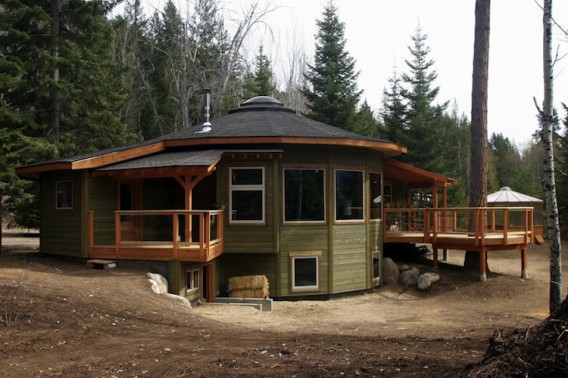
This round prefab Energy Star home is the first Energy Star efficiency program qualified house in British Columbia, Canada. Energy Star homes are more comfortable: cooler in the summer and warmer in the winter; save money on energy bills compared to structures built to standard code; are better for the surrounding environment, generating fewer greenhouse gases and using less energy; are 25% more efficient than those erected to minimum building standards. It’s similar getting 3 months of free energy use every maintenance year.

Design: Mandala Homes

Minimalist Prefab Modular House, California


Minimalist prefab modular house, California

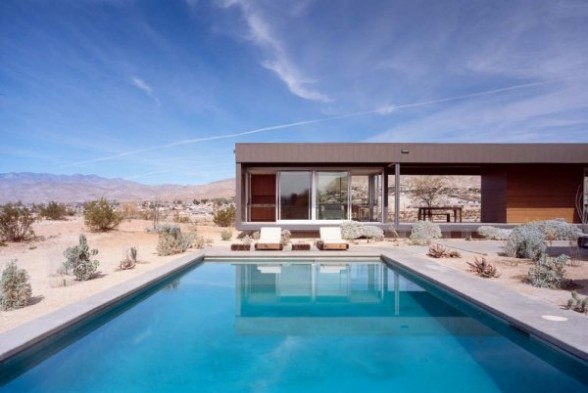
Design: Marmol Radziner
Area: 185 sqm
Location: California

Rising at 1,5 meters above the ground, this 185 sq.m. minimalist prefab modular house in California capturing the beautiful views of the surrounding desert landscape and Mount San Jacinto. The main living space is designed facing west with the view of the local open landscape. The structure was built using prefab modules and also consists of a metal frame which can be clad in glass, wood or metal. The architects used three different types of basic building modules: external modules for outdoor area of decks, modules that contain indoor living areas and modules to provide sun protection.